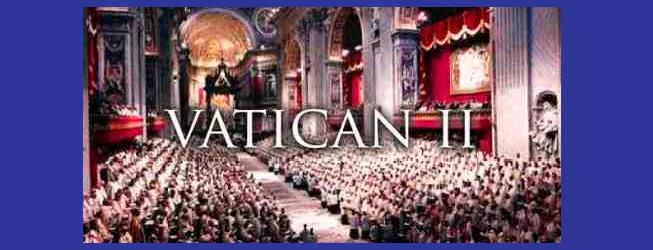
Here’s to our murder-less mystery story, where its religious-ecclesiastical background calls for careful threading, though no issues of faith or belief are involved. I am referring to the Second Vatican Council, (1961–1964), some of its deliberations, the shadowy maneuvers that brought them about, and the implications and consequences for the brethren and the world at large. The Council implemented profound changes, of which many faithful are probably not fully aware, and from which the Catholic Church has perhaps not yet recovered.
But first some background. The late 1950s were a time of critical ideological tension. In Italy, Communist governments, provincial and local, ran and administered large swaths of the country. There was a chance that in the next political elections the Communists could win the majority.
Understandably, America was concerned and had disturbing contingency plans should the enemy win. In this, I think, they misunderstood Italy’s collective psychology. For one, many had already perceived the utopian nature of Marxist egalitarianism and sensed that a Communist state would resemble a convent or a prison. But they also knew that, if the Italian Communists won, they would quickly convert the convent into a brothel and the prison into a discotheque. That is, a change in name but not in substance.
Still, Pope Pius XII, who died in 1958, came from a noble family with a long history of service to the Church. Now policy and the political winds called for a Pope with a different background, a “populist” we would say today — one whose humble origins would implicitly raise favor among the discontent, hope in the disenfranchised and sympathy in the downtrodden.
Pope John XXIII filled the bill, for he was the fourth among thirteen children in a family of sharecroppers. And soon he acquired the byname of “good.” From then on, the masses knew him as “the Good Pope.”
Logic is never a friend of mass psychology, for ‘good’ is a relative term. Good compared to whom? In fact, according to a meaningful section of past and current Catholic thinkers, John XXIII was a disaster.
But I digress. Prior to Vatican II, one the Good Friday’s rituals of the Catholic Church features(d) the reciting of a prayer originated in the fourth century AD. That prayer included the words, “Oremus et pro perfidis Judaeis,” meaning “Let us also pray for (the conversion of) the faithless Jews.”
During his last years, Pope Pius XII had received a visit from Jules Marx Isaac, a prominent French Jew who was also a Mason and a Marxist. Isaac asked the Pope to remove ‘perfidis’ from the prayer. Pius XII declined because, he explained, ‘perfidis’ does not mean ‘perfidious’ but ‘faithless.’ For the Jews do not recognize the divinity of Christ and consequently have no faith. Therefore, ‘faithless’ was not an insult but a statement of fact.
In the turbulent currents of our world, these historic, semi-theological preoccupations seem quaint. For today an can claim, on American prime-time TV, that she is glad that the Jews killed Christ. Adding, “If I could, I’d do it again, I’d f…ing” do it again.” And both Catholic and Protestant divines have met such statements (and worse), with a stony yet meaningful silence.
But in the 1950s the Zeitgeist was different. The first signal occurred during the Good Friday rituals of 1959, and we owe this information to Cardinal Bea, right hand of John XXIII. John XXIII reversed the ruling of his predecessor, Pius XII, and ordered the adjective ‘perfidis’ removed from the prayer recited since 400 AD.
Earlier on, in 1937, Pope Pius XI had issued another Encyclical, unusually written in German, and titled “Mit Brennenden Sorge”(With Burning Concern) in which he Pius XI also dealt with the thorny issue of collective Jewish responsibility for the death of Christ. He wrote, “God (the Word) became flesh among a people that one day would crucify him.” In 1959 John XXIII suppressed that sentence from the record of Pius XI’s Encyclical. Nor Internauts will find it by reading the Encyclical online.
There were other meaningful suppressions, for example, in the ritual for the baptism of adults wishing to become Catholics. In the old ritual the priest asked the applicant whether “he held in horror Judean perfidy and superstition.” To which the expected answer from the soon-to-be-Catholic was “yes.” That question-and-answer exchange was removed from the ritual.
John XXIII, like the current Pope, chose gestures over words to express his thoughts. The hierarchy, the subordinates and Catholics at large were to derive, from his gestures, their meaning and implications, as well as the Pope’s objectives and intentions.
On a Saturday in March, 1962 (the Council had begun the previous October), John XXIII made a well-publicized stop, with his car and caravan, in front of the Synagogue of Rome. The stop was timed to occur at the end of a Shabbat, when the Jews came out of the building. And when, from his car, the Pope blessed them.
More meaningful gestures were to come. Ariel Toaff, a Jewish professor at Tel Aviv University, has written an interesting book, in French, titled “La Paque des Juifs” (Easter of the Jews). Toaff examined the records of various trials, through the ages, of Jews accused of killing Christian children — murdered to use their blood in some Jewish Easter’s ceremonies. That book was promptly removed from circulation a few days after publishing, due to Jewish reaction and furious pressure. There was, however, a second edition, where the author added statements of sufficient impact as to reduce the ire of his co-religionists.
Among youngsters allegedly killed for the “Paque des Juifs” were Simonino from Trent (Italy), Andrea from Rinn (Austria), Lorenzino from Marostica (Italy) and Dominguito del Val (Spain). They had all been declared “Blessed,” their embalmed bodies had been enclosed in glass tombs, under a main altar or in a chapel dedicated to them.
By the way, the difference between a Blessed (Beatus) and a Saint (Sanctus) has to do with the number of miracles performed and their timing.
In May 1961, John XXIII wrote a secret letter to the religious authorities of the Churches or Abbeys involved, ordering to remove the tombs and all records, works of art, ex-voto, paintings and statues of these Blessed from their respective Churches, and to suppress immediately all related celebrations, festivities and processions.
For example, Andrea from Rinn was born in 1459 and beatified in 1751. At the Abbey of Wilten, in Austria, his chapel was renamed, his paintings and statues removed, and his sarcophagus relegated to a dark corner against a wall. An inscription on the stone masking the sarcophagus asked forgiveness of the Jews, for the veneration of that Blessed had been a cause of anti-Semitism. Finally, in 1985, the Archbishop of Innsbruck had the body removed from the church to a common cemetery — “for his veneration (Andrea-from-Rinn’s) is not substantiated by reliable historical documentation.” Which, in itself, is a remarkable statement, as the proclamation of a ‘Blessed’ follows a lengthy process and trial of canonization.
In fact, after the death of Pope John Paul II, the Vatican PR machinery created the slogan, “Subito Santo” (A Saint Immediately). Where ‘immediately’ infers a break from the traditional years, decades, and at times centuries, required before sanctification. Furthermore, the Blessed cannot be unblessed, depending on the political air of the times, though the Archbishop of Innsbruck clearly thought otherwise.
Back to the Council, where — as per the biography of Cardinal Bea — an important character comes to the stage. He is Nahum Goldmann (1885–1982), a Polish Jew, President of the World Jewish Congress (1951–1978) and editor of the “Encyclopedia Judaica” from 1932 to 1934. Later he was the Representative of the Judean Nation at the United Nations from 1935 to 1940, in Geneva and the US.
From 1939 to 1945 he was the director of the Jewish Spying Service, at a time when the Israel didn’t yet exist, though the Organization was recognized by the US Administration — evidence that the US already considered the state of Israel a fait accompli. In his autobiography, Goldmann writes of having been the first, in 1942, to launch the idea of the Nuremberg Trials. And he is also associated with the notorious Morgenthau Plan which called for the dismantling of all German industrial concerns, mass transfer of all remaining machinery and industrial tools to England as war reparations, prohibition of any industrial activity, the reduction of Germany to the level of a pre-industrial, medieval agricultural society which would have resulted in millions of deaths.
In his memoirs, Goldmann writes that the Second Vatican Council would not have occurred, but for three events,
— the Shoah
— the Nuremberg Trials
— the foundation of the state of Israel.
Nathan Ben Horin, Israel’s Ambassador to the Vatican, writes in his memoirs, that on February 27, 1962 the draft of the Encyclical “Nostra Aetate” (Our Age) produced by the International Judaic Congress, was delivered to Cardinal Bea, for transmittal to John XXIII.
In 1960, John XXIII through his right-hand Cardinal Bea, had invited Nahum Goldmann for a meeting with the Pope. In the meeting (so Goldmann writes), John XXIII said he wanted to propose, at the forthcoming Council, a revision of the relations between Jewry and Catholicism. To do so, the Pope needed for the Jewish Congress to send him a formal request for the reconsideration of Jewish-Catholic relations.
That is, John XXIII wanted a change, but he needed the Jewish Congress to ask for it.
Then, with another important step, John XXIII excluded the Holy Office from making any input on such an important matter as the relationship between the Catholic Church and other religions — which was the essence of the “Nostra Aetate” Encyclical.
This raised a bitter internal feud, for the Holy Office had been for centuries the official organ of analysis and deliberations regarding dogmas and general matters of faith. John XXIII simply ordered Cardinal Ottaviani, head of the Holy Office, to shut up.
John XXIII had several meetings with another influential Rabbi, Abraham Heschel, who also contributed to the writing of the Encyclical — so writes the secretary of Cardinal Bea.
And finally, in an issue of the French Jewish weekly Tribune Juive, Lazare Landau, a Jewish historian, writes,
In a glacial night of the winter 62–63, I was invited to an extraordinary meeting of the “Communitarian Center for Peace,” held at the Synagogue of Strasbourg. At the end of the Shabbat, the Directors received in secret, in a cellar of the building, an envoy of John XXIII, Yves Congar, [a Dominican friar who had a critical influence on the ‘progressive’ measures taken by the Council as a whole.]
There were ten of us. Congar, in name of John XXIII, asked us what we expected from the Catholic Church, as regards the millenarian “Jewish Question.” We said that we wanted the complete re-habilitation of the Jews, as regards the death of Christ. “Nostra Aetate” was a total revolution, as Congar later said to me, in the doctrine of the Church, as regards the Jews.
In fact — so I am told by current practicing Catholics who attend Masses and functions in their churches — some priests praise the greatness of Hebraism, assert that Abraham is our common ancestor and that the Jews are our ‘elder brothers’ of the Bible. Forgetting the polygamy of the patriarchs, the gallantries of David, the seraglio of Solomon, the incest in the Leviticus, and a general Old Testament undertone of hyper-ethnocentrism, fear and loathing of gentiles, the desire to dominate gentiles, and revenge against their enemies.
The same priests sermonize on the rights of Jews to the ancestral land of Israel. On the wars in the Middle East, fought for Israel, and on the slaughter of Palestinians, the word is mum. Though various Popes have at times deplored, and generally lamented that war causes death and suffering, which almost equates to saying that a great cause of the night is lack of sunshine.2
In summary, there is sufficient evidence as to who took the initiative and who were the authors of the Encyclical “Nostra Aetate.”
Nevertheless, the debates at the Council on the issue of the Jews’ involvement in the death of Christ were contentious and combative. After all, according to the Gospels, the Jews had asked for the blood of Christ to fall “on their head and that of their children.” The Gospel of St. John made this clear, and St. Paul had declared that adopting alternative Gospels would be anathema.
The bishops of the Arab world, in particular, objected to the appeasement of the Jews because appeared to be an indirect Catholic endorsement of the rape of Palestine. A de-facto endorsement of Israel occurred in 1965, though formal recognition and exchange of embassies had to wait for John Paul II, in 1993.
In the end there was a compromise. The encyclical “Nostra Aetate” would state that only “some,” not “all,” Jews were responsible for the death of Christ.
This did not prevent the (Catholic) University of Notre Dame, in Indiana, from freeing all Jews of any responsibility related to the issue.
Furthermore, as I hear from Professor E. Michael-Jones, the University hired a Jewish psychologist to teach a seminar on “togetherness” and similar topics, to priests and nuns. This had the foreseeable consequence that a number of priests left the ministry and nuns the convent…. to get married. If there is life after death, Boccaccio will laugh his head off.
To conclude, the Second Vatican Council has puzzled many Catholics. Perhaps John XXIII believed that the stream of time was running in favor of the Jews, with the result that he was forced away from the ancient paths by the rough torrent of occasion.3
But some Catholics would like to know where the Vatican is headed. For, when a revolutionary change of religious belief is imposed from above, strength of conviction is weakened and judgment confounded. Resistance shrinks from revolution of beliefs, even if the prime mover of the insurgency keeps wearing the robes of the Prime Minister of God.
At times, the truth may appear grey, but isn’t. It is black and white, at least in patches. And even the blackness and the whiteness of the patches are often debated and debatable. For nothing is black or white, but thinking makes it so.4
Żydowski udział w radykalnych zmianach Soboru Watykańskiego II
Oto nasza tajemnicza historia bez morderców, w której jej religijno-kościelne tło wymaga starannego przewlekania, choć nie ma w tym kwestii żadnych problemów związanych z wiarą lub wiarą. Mam na myśli Sobór Watykański II (1961-1964), niektóre z jego rozważań, mroczne manewry, które je wywołały, oraz implikacje i konsekwencje dla braci i całego świata. Rada dokonała głębokich przemian, z których wielu wiernych prawdopodobnie nie jest w pełni świadomych, a których Kościół katolicki prawdopodobnie jeszcze nie odzyskał.
Ale najpierw trochę tła. Koniec lat pięćdziesiątych był okresem krytycznego napięcia ideologicznego. We Włoszech rządy komunistyczne, prowincjonalne i lokalne, zarządzały dużymi obszarami kraju i zarządzały nimi. Była szansa, że w następnych wyborach politycznych komuniści mogą zdobyć większość.
Zrozumiałe, że Ameryka była zaniepokojona i miała niepokojące plany awaryjne, gdyby wygrał wróg. Sądzę, że w tym przypadku źle zrozumieli kolektywną psychologię Włoch. Po pierwsze wielu już dostrzegło utopijną naturę marksistowskiego egalitaryzmu i wyczuwało, że państwo komunistyczne będzie przypominało klasztor lub więzienie. Ale wiedzieli też, że jeśli włoscy komuniści wygrają, szybko przekształcą klasztor w burdel i więzienie w dyskotekę. To znaczy zmiana nazwiska, ale nie treści.
Jednak papież Pius XII, który zmarł w 1958 r., Pochodził ze szlacheckiej rodziny o długiej historii służby dla Kościoła. Teraz polityka i wiatry polityczne wzywały do Papieża o innym pochodzeniu, "populistycznego", co dziś powiedzielibyśmy - takiego, którego skromne pochodzenie w sposób dorozumiany wzbudzałoby przychylność wśród niezadowolenia, nadziei na pozbawioną praw obywatelskich i sympatię uciśnionych.
Papież Jan XXIII wypełnił projekt ustawy, ponieważ był czwartym z trzynastu dzieci w rodzinie współwłaścicieli. Wkrótce zyskał sobie przydomek "dobry". Odtąd masy znały go jako "dobrego papieża".
Logika nigdy nie jest przyjacielem psychologii masowej, ponieważ "dobro" jest pojęciem względnym. Dobry w porównaniu do kogo? W rzeczywistości, według znaczącej części przeszłych i obecnych katolickich myślicieli, Jan XXIII był katastrofą.
Ale dygresję. Przed Vaticanum II jeden z rytuałów Wielkiego Piątku w Kościele katolickim zawiera (d) recytowanie modlitwy powstałej w czwartym wieku naszej ery. Ta modlitwa zawierała słowa " Oremus et pro perfidis Judaeis ", co oznacza "Módlmy się również za (nawrócenie) niewiernych Żydów".
W ciągu ostatnich lat papież Pius XII odwiedził Julesa Marxa Isaaca, wybitnego francuskiego Żyda, który był także masonem i marksistą. Izaak poprosił Papieża, aby usunął "perfidis" z modlitwy. Pius XII odmówił, ponieważ, jak wyjaśnił, "perfidis" nie oznacza "perfidnego", lecz "niewiernego". Bo Żydzi nie uznają boskości Chrystusa iw konsekwencji nie mają wiary. Dlatego "niewierność" nie była zniewagą, lecz stwierdzeniem faktu.
W burzliwych prądach naszego świata te historyczne, semi-teologiczne troski wydają się dziwne. Na dziś an
może prosić, w amerykańskiej telewizji prime-time, że cieszy się, że Żydzi zabili Chrystusa. Dodając: "Gdybym mógł, zrobiłbym to ponownie, chciałbym ..." powtórzyć to jeszcze raz. "A zarówno katoliccy, jak i protestanccy duchowni spotkali się z takimi stwierdzeniami (i co gorsza) z kamienną, ale wymowną ciszą.
Ale w latach 50. Zeitgeist był inny. Pierwszy sygnał pojawił się podczas rytuałów Wielkiego Piątku w 1959 r. I zawdzięczamy tę informację kardynałowi Bei, prawą ręką Jana XXIII. Jan XXIII odwrócił orzeczenie swego poprzednika, Piusa XII, i nakazał przymiotnik "perfidis" usunięty z modlitwy recytowanej od 400 AD.
Wcześniej, w 1937 r., Papież Pius XI wydał kolejną encyklikę, niezwykle napisaną po niemiecku, zatytułowaną "Mit Brennenden Sorge" (z płonącym zaniepokojeniem), w której Pius XI zajmował się również ciernistą kwestią zbiorowej żydowskiej odpowiedzialności za śmierć Chrystus. Napisał: "Bóg (Słowo) stał się ciałem wśród ludu, który pewnego dnia go ukrzyżował". W 1959 roku Jan XXIII stłumił to zdanie z zapisów Encykliki Piusa XI. Ani Internauci nie znajdą go, czytając Encyklikę online.
Na przykład w rytuale chrztu dorosłych pragnących zostać katolikami miały miejsce inne znaczące tłumienia. W starym rytuale ksiądz zapytał skarżącego, czy "zachowywał w zgrozę wiarę i przesądy Judy". Na co oczekiwana odpowiedź od przyszłego katolika brzmi "tak". Ta wymiana pytań i odpowiedzi została usunięta z rytuał.
Jan XXIII, podobnie jak obecny papież, wybrał gesty na słowa, aby wyrazić swoje myśli. Hierarchia, podwładni i ogół katolików mieli czerpać z jego gestów, znaczenia i implikacji, a także celów i intencji papieża.
W sobotę marca 1962 r. (Rada rozpoczęła się w październiku), Jan XXIII dokonał nagłośnionego postoju z samochodem i karawaną przed rzymską Synagogą.Przystanek miał nastąpić pod koniec szabatu, kiedy Żydzi wyszli z budynku. A kiedy z jego samochodu papież ich pobłogosławił.
Nadchodzą bardziej znaczące gesty. Ariel Toaff, żydowski profesor Uniwersytetu w Tel Awiwie, napisał w języku francuskim interesującą książkę zatytułowaną "La Paque des Juifs" (Wielkanoc Żydów). Toaff badał zapisy różnych prób, przez wieki, Żydów oskarżanych o zabijanie chrześcijańskich dzieci - zamordowanych, by użyć ich krwi w niektórych żydowskich ceremoniach wielkanocnych. Ta książka została szybko usunięta z obiegu kilka dni po publikacji, z powodu żydowskiej reakcji i wściekłej presji. Było jednak drugie wydanie, w którym autor dodał oświadczenia o wystarczającym wpływie, aby zmniejszyć gniew współwyznawców.
Wśród młodzieży rzekomo zabitej za "Paque des Juifs" byli Simonino z Trent (Włochy), Andrea z Rinn (Austria), Lorenzino z Marostica (Włochy) i Dominguito del Val (Hiszpania). Wszyscy zostali uznani za "Błogosławionych", ich zabalsamowane ciała zostały zamknięte w szklanych grobowcach, pod głównym ołtarzem lub w poświęconej im kaplicy.
Nawiasem mówiąc, różnica pomiędzy Błogosławionym (Beatus) i Świętym (Sanctus) ma związek z liczbą dokonanych cudów i ich czasem.
W maju 1961 r. Jan XXIII napisał tajny list do władz religijnych zaangażowanych kościołów lub klasztorów, nakazując usunięcie grobów i wszystkich nagrań, dzieł sztuki, ex-voto, obrazów i posągów tych błogosławionych z ich Kościołów, oraz natychmiastowo tłumić wszystkie powiązane uroczystości, uroczystości i procesje.
Na przykład Andrea z Rinn urodził się w 1459 r. I beatyfikował w 1751 r. W opactwie w Wilten w Austrii zmieniono jego kaplicę, usunięto jego obrazy i posągi, a sarkofag spoczął w ciemnym kącie pod ścianą. Napis na kamieniu maskującym sarkofag prosi o przebaczenie Żydów, gdyż cześć tego Błogosławionego była przyczyną antysemityzmu. Wreszcie, w 1985 r. Arcybiskup Innsbrucka usunął ciało z kościoła na wspólny cmentarz - "dla jego czci (Andrea-z-Rinn) nie poparto wiarygodną historyczną dokumentacją." Co samo w sobie jest godnym uwagi stwierdzeniem , ponieważ proklamacja "błogosławionego" następuje po długim procesie i próbie kanonizacji.
W rzeczywistości, po śmierci papieża Jana Pawła II, watykański aparat PR stworzył hasło "Subito Santo" (A Saint Natychmiast). Tam, gdzie "natychmiast" pojawia się przerwa od tradycyjnych lat, dziesięcioleci, a czasem stuleci, wymaganych przed uświęceniem. Co więcej, błogosławiony nie może być nieskalany, w zależności od atmosfery politycznej czasów, chociaż arcybiskup Innsbrucku wyraźnie uważał inaczej.
Wracając do Rady, gdzie - zgodnie z biografią kardynała Bei - na scenie pojawia się ważna postać. On jest Nahum Goldmann (1885-1982), polski Żyd, Prezydent Światowego Kongresu Żydowskiego (1951-1978) i redaktor "Encyklopedii Judaica" od 1932 do 1934 roku. Później był Przedstawicielem Judejskiego Narodu w Stanach Zjednoczonych. Narody w latach 1935-1940, w Genewie i USA.
Od 1939 do 1945 był dyrektorem żydowskiej służby szpiegowskiej, w czasach, gdy Izrael jeszcze nie istniał, chociaż Organizacja została uznana przez administrację amerykańską - dowody na to, że USA uznały już państwo Izrael za fakt dokonany. W swojej autobiografii Goldmann pisze, że był pierwszym, w 1942 r., Pomysłem przeprowadzenia procesów norymberskich. Jest także powiązany z osławionym planem Morgenthaua, który wezwał do likwidacji wszystkich niemieckich koncernów przemysłowych, masowego transferu wszystkich pozostałych maszyn i narzędzi przemysłowych do Anglii jako reparacji wojennych, zakazu jakiejkolwiek działalności przemysłowej, redukcji Niemiec do poziomu przedindustrialne, średniowieczne społeczeństwo rolnicze, które doprowadziłoby do milionów ofiar śmiertelnych.
W swoich wspomnieniach Goldmann pisze, że Sobór Watykański II nie powstałby, gdyby nie trzy wydarzenia,
- Szoa
- procesy norymberskie
- fundament państwa Izrael.
Nathan Ben Horin, ambasador Izraela w Watykanie, pisze w swoich wspomnieniach, że 27 lutego 1962 r. Projekt encykliki "Nostra Aetate" (Nasz wiek), wyprodukowany przez Międzynarodowy Kongres Judaistyczny, został przekazany kardynałowi Bei, aby przekazać go Jan XXIII.
W 1960 r. Jan XXIII poprzez prawą kardynał Bea zaprosił Nahuma Goldmanna na spotkanie z papieżem. Na spotkaniu (tak pisze Goldmann), Jan XXIII powiedział, że chciałby zaproponować, na zbliżającym się Soborze, rewizję stosunków między żydostwem a katolicyzmem. Aby to uczynić, papież potrzebował, aby Kongres Żydowski przesłał mu formalną prośbę o ponowne rozpatrzenie stosunków żydowsko-katolickich.
To znaczy, że Jan XXIII chciał zmiany, ale potrzebował Kongresu Żydowskiego, by o to poprosić.
Następnie, z innym ważnym krokiem, Jan XXIII wykluczył Świętego Oficjum z dokonania jakiegokolwiek wkładu w tak ważną kwestię jak związek między Kościołem katolickim a innymi religiami - co stanowiło istotę encykliki "Nostra Aetate".
To wywołało zgorzkniały wewnętrzny spór, ponieważ Święte Biuro było od wieków oficjalnym organem analizy i rozważań dotyczących dogmatów i ogólnych kwestii wiary. Jan XXIII po prostu kazał zamknąć się kardynał Ottaviani, szef Świętego Oficjum.
Jan XXIII miał kilka spotkań z innym wpływowym rabinem, Abrahamem Heschelem, który również przyczynił się do napisania Encykliki - pisze sekretarz kardynała Bei.
I wreszcie, w wydaniu francuskiego tygodnika żydowskiego Tribune Juive , Lazare Landau, żydowski historyk, pisze:
W lodowatą noc zimy 62-63 zostałem zaproszony na nadzwyczajne spotkanie "Wspólnotowego Centrum dla Pokoju", które odbyło się w synagodze w Strasburgu. Pod koniec szabatu dyrektorzy otrzymali w tajemnicy, w piwnicy budynku, posła Jana XXIII, Yvesa Congara, [dominikanina, który miał decydujący wpływ na "postępowe" środki podejmowane przez Radę jako cały.]
Było nas dziesięciu. Congar, w imieniu Jana XXIII, zapytał nas, czego oczekiwaliśmy od Kościoła katolickiego, jeśli chodzi o tysiącletnią "kwestię żydowską". Powiedzieliśmy, że chcemy całkowitej rehabilitacji Żydów, jeśli chodzi o śmierć Chrystusa. "Nostra Aetate" była całkowitą rewolucją, jak powiedział później Congar, w doktrynie Kościoła, jeśli chodzi o Żydów.
W rzeczywistości - tak mi powiedzą obecni praktykujący katolicy, którzy uczestniczą w mszach i pełnią funkcje w swoich kościołach - niektórzy księża chwalą wielkość hebrajstwa, twierdzą, że Abraham jest naszym wspólnym przodkiem i że Żydzi są naszymi "starszymi braćmi" Biblii. Zapominając o poligamię patriarchów, o galantiach Dawida, o serafie Salomona, kazirodztwie w Księdze Kapłańskiej io ogólnym starotestamentowym tonie hiper-etnocentryzmu, o lęku i nienawiści do pogan, o chęci dominacji pogan i zemsty na ich wrogowie.
Ci sami kapłani upominają się o prawa Żydów do rodowej ziemi Izraela. W wojnach na Bliskim Wschodzie, walczących o Izrael i o zabijanie Palestyńczyków, słowo to "mama". Chociaż różni papieże czasem żałowali, i ogólnie lamentowali, że wojna powoduje śmierć i cierpienie, co niemal równa się stwierdzeniu, że wielką przyczyną nocy jest brak słońca. 2
Podsumowując, istnieją wystarczające dowody na to, kto przejął inicjatywę i kto był autorem encykliki "Nostra Aetate".
Niemniej jednak debaty w Radzie na temat zaangażowania Żydów w śmierć Chrystusa były kontrowersyjne i wojownicze. Wszakże według Ewangelii Żydzi prosili, aby krew Chrystusa spadła "na ich głowę i na ich dzieci". Ewangelia św. Jana jasno to wyjaśniła, a św. Paweł ogłosił, że przyjął alternatywne Ewangelie. byłby przekleństwem.
Biskupi świata arabskiego w szczególności sprzeciwili się ugłaskaniu Żydów, ponieważ wydawało się pośrednim katolickim potwierdzeniem gwałtu w Palestynie.Faktyczne poparcie Izraela miało miejsce w 1965 roku, chociaż formalne uznanie i wymiana ambasad musiały czekać na Jana Pawła II w 1993 roku.
W końcu doszło do kompromisu. Encyklika "Nostra Aetate" stwierdza, że tylko "niektórzy", a nie "wszyscy", Żydzi byli odpowiedzialni za śmierć Chrystusa.
Nie przeszkodziło to (katolickiemu) Uniwersytetowi Notre Dame w Indianie uwolnić wszystkich Żydów od odpowiedzialności związanej z tą kwestią.
Ponadto, jak słyszę od profesora E. Michaela-Jonesa, uniwersytet zatrudnił żydowskiego psychologa, aby udzielił seminarium na temat "wspólnoty" i podobnych tematów kapłanom i mniszkom. To dało się przewidzieć, że wielu kapłanów opuściło duszpasterstwo i zakonnice z klasztoru ... wziąć ślub. Jeśli jest życie po śmierci, Boccaccio roześmieje mu głowę.
Podsumowując, Sobór Watykański II zaskoczył wielu katolików. Być może Jan XXIII wierzył, że strumień czasu działa na korzyść Żydów, w wyniku czego został zmuszony odejść od starożytnych ścieżek przez ostry potok okazji. 3
Ale niektórzy katolicy chcieliby wiedzieć, dokąd zmierza Watykan. Gdy bowiem narzucana jest rewolucyjna zmiana wiary religijnej z góry, siła przekonywania zostaje osłabiona, a osądzony sąd. Opór cofa się przed rewolucją przekonań, nawet jeśli główny sprawca rebelii nadal nosi szaty premiera Boga.
Czasami prawda może wydawać się szara, ale nie jest. Jest czarno-biały, przynajmniej w łatach. A nawet czerń i biel łat są często dyskutowane i dyskusyjne. Bo nic nie jest czarne ani białe, ale myślenie sprawia, że tak jest. 4


