Iran's most powerful military commander, General Qasem Soleimani, has been killed by a US air strike in Iraq.
The 62-year old spearheaded Iranian military operations in the Middle East as head of Iran's elite Quds Force.
He was killed at Baghdad airport, alongside local Iran-backed militias, early on Friday in a strike ordered by US President Donald Trump.
Gen Soleimani's killing marks a major escalation in tensions between Washington and Tehran.
Under his leadership, Iran had bolstered Hezbollah in Lebanon and other pro-Iranian militant groups, expanded Iran's military presence in Iraq and Syria and orchestrated Syria's offensive against rebel groups in the country's long civil war.
Iran's Supreme Leader Ayatollah Ali Khamenei said "severe revenge awaits the criminals" behind the attack. He also announced three days of national mourning.
Gen Soleimani was widely seen as the second most powerful figure in Iran behind the Ayatollah Khamenei. His Quds Force, an elite unit of the Iranian Revolutionary Guards, reported directly to the Ayatollah and he was hailed as a heroic national figure.
But the US has called the commander and the Quds Force terrorists and holds them responsible for the deaths of hundreds of US personnel.
IMMEDIATE RELEASE
Statement by the Department of Defense
JAN. 2, 2020
At the direction of the President, the U.S. military has taken decisive defensive action to protect U.S. personnel abroad by killing Qasem Soleimani, the head of the Islamic Revolutionary Guard Corps-Quds Force, a U.S.-designated Foreign Terrorist Organization.
General Soleimani was actively developing plans to attack American diplomats and service members in Iraq and throughout the region. General Soleimani and his Quds Force were responsible for the deaths of hundreds of American and coalition service members and the wounding of thousands more. He had orchestrated attacks on coalition bases in Iraq over the last several months – including the attack on December 27th – culminating in the death and wounding of additional American and Iraqi personnel. General Soleimani also approved the attacks on the U.S. Embassy in Baghdad that took place this week.
This strike was aimed at deterring future Iranian attack plans. The United States will continue to take all necessary action to protect our people and our interests wherever they are around the world.
President Trump, who was in Florida at the time of the strike, tweeted an image of the American flag shortly after the news broke.
A statement from the Pentagon said Gen Soleimani "was actively developing plans to attack American diplomats and service members in Iraq and throughout the region".
"This strike was aimed at deterring future Iranian attack plans," it added.
Meanwhile, global oil prices have soared by more than 4% in the wake of the attack.
What happened?
Gen Soleimani and officials from Iran-backed militias were leaving Baghdad airport in two cars when they were hit by a US drone strike near a cargo area, US media reports say.
The commander had reportedly flown in from Lebanon or Syria. Several missiles reportedly struck the convoy and at least five people are thought to have died.
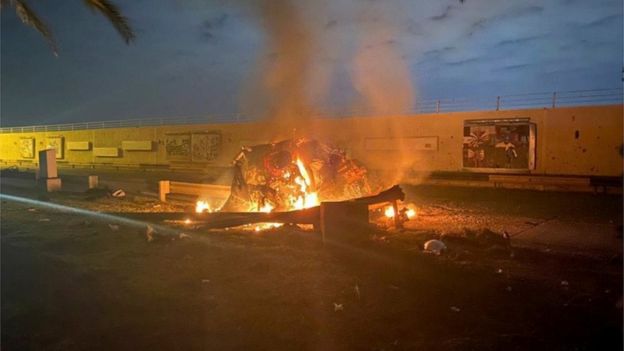 Image copyrightREUTERSImage captionThere was burning debris outside Baghdad International Airport
Iran's Revolutionary Guards said Iraqi militia leader Abu Mahdi al-Muhandis was among those killed.
The Pentagon statement said: "At the direction of the president, the US military has taken decisive defensive action to protect US personnel abroad by killing Qasem Soleimani."
It added: "The United States will continue to take all necessary action to protect our people and our interests wherever they are around the world."
The drone strike comes days after protesters attacked the US embassy in Baghdad, clashing with US forces at the scene. The Pentagon said Gen Soleimani approved the attacks on the embassy.
Qasem Soleimani: USA zabily irańskiego generała podczas nalotu w Bagdadzie
Najpotężniejszy dowódca wojskowy Iranu, generał Qasem Soleimani, został zabity przez amerykański atak lotniczy w Iraku.
62-letni przywódca irańskich operacji wojskowych na Bliskim Wschodzie jako szef elitarnej siły Iranu Quds Force.
Został zabity na lotnisku w Bagdadzie, wraz z lokalnymi wspieranymi przez Iran bojownikami, w piątek rano w ataku zarządzonym przez prezydenta USA Donalda Trumpa.
Zabójstwo gen Soleimani oznacza poważną eskalację napięć między Waszyngtonem a Teheranem.
Pod jego przywództwem Iran wzmocnił Hezbollah w Libanie i innych pro-irańskich grupach bojowników, rozszerzył wojskową obecność Iranu w Iraku i Syrii oraz zorganizował ofensywę Syrii przeciwko grupom rebeliantów podczas długiej wojny domowej w tym kraju.
Najwyższy przywódca Iranu Ajatollah Ali Chamenei powiedział „surowa zemsta czeka na przestępców” za atakiem. Ogłosił także trzy dni żałoby narodowej.
Gen Soleimani był powszechnie postrzegany jako druga najpotężniejsza postać w Iranie za ajatollahem Chameneim. Jego Siły Quds, elitarna jednostka irańskich Strażników Rewolucji, zgłosiły się bezpośrednio do ajatollaha i został okrzyknięty bohaterską postacią narodową.
Ale USA wezwały dowódcę i terrorystów Sił Quds i pociągają ich do odpowiedzialności za śmierć setek amerykańskiego personelu.
Prezydent Trump, który był na Florydzie w czasie strajku, opublikował na Twitterze zdjęcie flagi amerykańskiej krótko po tym, jak rozeszły się wiadomości.
Oświadczenie Pentagonu mówi, że gen. Soleimani „aktywnie rozwija plany ataku na amerykańskich dyplomatów i członków służby w Iraku i całym regionie”.
„Ten strajk miał na celu powstrzymanie przyszłych planów irańskiego ataku” - dodał.
Tymczasem globalne ceny ropy naftowej wzrosły o ponad 4% po ataku.
Co się stało?
Według doniesień amerykańskich mediów gen Soleimani i urzędnicy z wspieranych przez Iran bojowników opuszczali lotnisko w Bagdadzie w dwóch samochodach, kiedy zostali uderzeni przez amerykański dron w pobliżu strefy ładunkowej.
Dowódca podobno przyleciał z Libanu lub Syrii. Podobno kilka pocisków uderzyło w konwój i uważa się, że co najmniej pięć osób zmarło.
Rewolucyjni Strażnicy Iranu stwierdzili, że wśród zabitych był lider irackiej milicji Abu Mahdi al-Muhandis.
Oświadczenie Pentagonu mówi: „Na polecenie prezydenta wojsko USA podjęło zdecydowane działania obronne w celu ochrony personelu USA za granicą poprzez zabicie Qasem Soleimani”.
Dodał: „Stany Zjednoczone będą nadal podejmować wszelkie niezbędne działania w celu ochrony naszych ludzi i naszych interesów niezależnie od tego, gdzie się znajdują na całym świecie”.
Strajk dronów ma miejsce kilka dni po tym, jak protestujący zaatakowali ambasadę USA w Bagdadzie , starając się z siłami USA na miejscu zdarzenia. Pentagon powiedział, że gen. Soleimani zatwierdził ataki na ambasadę.
Najpotężniejsza wojskowa postać Iranu była uważana za strategicznego mistrza stojącego za ogromnymi ambicjami na Bliskim Wschodzie i prawdziwego ministra spraw zagranicznych tego kraju, jeśli chodzi o sprawy wojny i pokoju.
Jako dowódca elitarnych sił specjalnych kierował tajnymi operacjami obejmującymi sieć milicji zastępczych w całym regionie. Dowodził także wpływami politycznymi w Iranie i był uważany za drugiego po wszechmocnym Iranie.
Był powszechnie uważany za głównego architekta wojny prezydenta Baszara al-Assada w Syrii, trwającego konfliktu w Iraku, walki z Państwem Islamskim i wielu innych bitew.
Srebrnowłosy generał z krótko przyciętą brodą był kultowym bohaterem dla swoich wojowników i twarzą zła dla swoich wrogów. Przez lata urzędnicy amerykańscy zastanawiali się nad zabiciem przebiegłego przeciwnika, który rozkazał ataki na swoje siły i drażnił ich kolcami z mediów społecznościowych.
Czasami niektóre z ich celów były zgodne, w tym w walce z Państwem Islamskim, ale pozostały zaprzysięgłymi wrogami.
Irańscy urzędnicy są kategoryczni - jest to akt wojny, któremu musi towarzyszyć „ostra odwet”. Iran ma wiele sposobów i środków, by odpowiedzieć, gdy długotrwały kryzys nagle przechodzi do nowego, niebezpiecznego rozdziału.
Co powiedział Iran?
Minister spraw zagranicznych Iranu Javad Zarif nazwał atak „aktem międzynarodowego terroryzmu”, tweetując, że USA „ponosi odpowiedzialność za wszelkie konsekwencje swojego nieuczciwego awanturnictwa”.
Amerykański akt międzynarodowego terroryzmu, którego celem jest zamach na generała Soleimani - najskuteczniejsza siła walcząca z Daiszem (ISIS), Al Nusrah, Al-Kaidą i in. - jest wyjątkowo niebezpieczny i głupia eskalacja.
USA ponoszą odpowiedzialność za wszelkie konsekwencje swojego nieuczciwego awanturnictwa.
Koniec postu na Twitterze autorstwa @JZarif
Mohsen Rezaei, były dowódca Gwardii Rewolucyjnej, powiedział, że Iran podejmie „energiczną zemstę na Ameryce”. Rzecznik rządu irańskiego powiedział, że najwyższy organ bezpieczeństwa kraju spotka się za kilka godzin, aby omówić „przestępczy akt ataku”.
„Iran i inne wolne narody regionu zemszczą się na tej makabrycznej zbrodni popełnionej przez zbrodniczą Amerykę”, powiedział prezydent Hasan Rouhani w oświadczeniu.
Dodał, że jego śmierć „podwoiła determinację narodu irańskiego i innych wolnych narodów w walce z prześladowaniem Ameryki”.
Kim był Qasem Soleimani?
Od 1998 r. Generał dywizji Qasem Soleimani dowodził irańską Siłą Quds - elitarną jednostką w Irańskiej Gwardii Rewolucyjnej, która zajmuje się tajnymi operacjami za granicą.
Iran uznał rolę Siły Quds w konfliktach w Syrii, gdzie doradzał siłom lojalnym wobec prezydenta Baszara al-Assada i uzbrojonym tysiącom szyickich bojowników muzułmańskich walczących u ich boku, a także w Iraku, gdzie poparł zdominowaną przez szyję dominację siła paramilitarna, która pomogła pokonać IS.
Konflikty te sprawiły, że niegdyś samotny Gen Soleimani stał się czymś celebrytym w Iranie.
Administracja Trumpa twierdzi, że Siły Quds są „podstawowym mechanizmem Iranu do kultywowania i wspierania” wyznaczonych przez USA ugrupowań terrorystycznych na Bliskim Wschodzie - w tym libańskiego ruchu Hezbollah i palestyńskiego Islamskiego Dżihadu - poprzez zapewnienie finansowania, szkolenia, broni i sprzętu.
W kwietniu sekretarz stanu USA Mike Pompeo wyznaczył Straż Rewolucyjną Iranu i siły Quds jako zagraniczne organizacje terrorystyczne.
Iran's most powerful military figure was regarded as the strategic mastermind behind its vast ambition in the Middle East and the country's real foreign minister when it came to matters of war and peace.
As commander of elite special forces, he orchestrated covert operations, involving a web of proxy militias, across the region. He also commanded political influence inside Iran and was regarded as second only to Iran's all-powerful Supreme Leader.
He was widely considered a principal architect of President Bashar al-Assad's war in Syria, the ongoing conflict in Iraq, the fight against Islamic State, and many battles beyond.
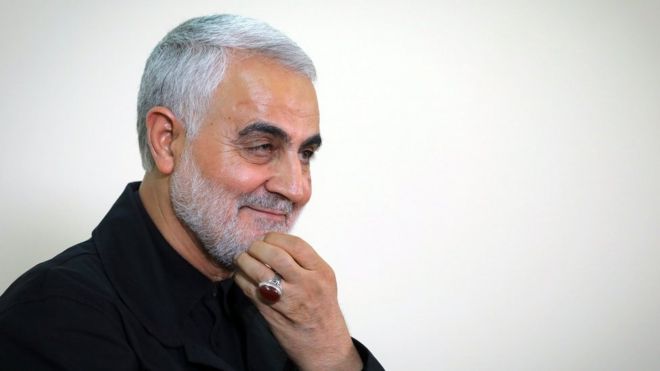
The silver-haired general with a close-cropped beard was a cult hero for his fighters and the face of evil for his foes. For years, US officials considered killing a cunning adversary who ordered attacks on their forces and taunted them with social media barbs.
At times some of their aims were aligned, including in the fight against Islamic State, but they remained sworn enemies.
Iranian officials are categorical - this is an act of war to be met by "harsh retaliation". Iran has many ways and means to strike back as a long-simmering crisis suddenly moves to a new, dangerous chapter.
Media captionChief international correspondent Lyse Doucet explains the significance of the attack
What has Iran said?
Iran's Foreign Minister, Javad Zarif, called the attack an "act of international terrorism", tweeting that the US "bears responsibility for all consequences of its rogue adventurism."
Javad Zarif✔@JZarifThe US' act of international terrorism, targeting & assassinating General Soleimani—THE most effective force fighting Daesh (ISIS), Al Nusrah, Al Qaeda et al—is extremely dangerous & a foolish escalation.
The US bears responsibility for all consequences of its rogue adventurism.
End of Twitter post by @JZarif
Mohsen Rezaei, the former commander of the Revolutionary Guards, said Iran would take "vigorous revenge on America". A spokesman for the Iranian government said the country's top security body would meet in a few hours to discuss the "criminal act of attack".
"Iran and the other free nations of the region will take revenge for this gruesome crime from criminal America," President Hasan Rouhani said in a statement.
His death has "redoubled the determination of the nation of Iran and other free nations to stand against America's bullying", he added.
Who was Qasem Soleimani?
From 1998, Maj Gen Qasem Soleimani led Iran's Quds Force - an elite unit in Iran's Revolutionary Guards, which handles clandestine operations abroad.
Iran has acknowledged the role of the Quds Force in the conflicts in Syria, where it has advised forces loyal to President Bashar al-Assad and armed thousands of Shia Muslim militiamen fighting alongside them, and in Iraq, where it has backed a Shia-dominated paramilitary force that helped tackle IS.
These conflicts turned the once-reclusive Gen Soleimani into a something of celebrity in Iran.
The Trump administration has alleged that the Quds Force is "Iran's primary mechanism for cultivating and supporting" US-designated terrorist groups across the Middle East - including Lebanon's Hezbollah movement and Palestinian Islamic Jihad - by providing funding, training, weapons and equipment.
US Secretary of State Mike Pompeo designated Iran's Revolutionary Guards and its Quds Force as foreign terrorist organisations in April.
Media captionPompeo desginated Iran's Revolutionary Guards Corp as a terrorist group last year


