Note from the Editor: Although we agree with the general thesis of Prof. Mattias Desmet, which is being presented in this series, we disagree with his historical example of the Crusades as a case of mass hypnosis. The Crusades were born from a noble desire based on reason and inspired by the Catholic Faith to liberate the Sepulcher of Christ from the hands of profaners. Most definitely not from public anxiety regarding the life of Catholics in Europe as presented by Prof. Desmet. - A.S.G.
It is easier to understand what mass formation is if you consider it as mass hypnosis, because they’re not merely similar, they’re identical, Desmet says. Mass formation is a kind of hypnosis that emerges when specific conditions are met. And, disturbingly, these conditions, and the hypnotic trance that emerges, almost always precede the rise of totalitarian systems.
|
Note from the Editor: Although we agree with the general thesis of Prof. Mattias Desmet, which is being presented in this series, we disagree with his historical example of the Crusades as a case of mass hypnosis. The Crusades were born from a noble desire based on reason and inspired by the Catholic Faith to liberate the Sepulcher of Christ from the hands of profaners. Most definitely not from public anxiety regarding the life of Catholics in Europe as presented by Prof. Desmet. - A.S.G. It is easier to understand what mass formation is if you consider it as mass hypnosis, because they’re not merely similar, they’re identical, Desmet says. Mass formation is a kind of hypnosis that emerges when specific conditions are met. And, disturbingly, these conditions, and the hypnotic trance that emerges, almost always precede the rise of totalitarian systems.
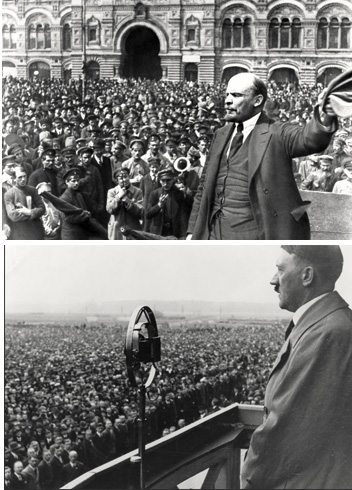
Totalitarian States are based on mass hypnosis While totalitarianism and a classical dictatorship share certain features, there are distinct differences at the psychological level. According to Desmet, a classical dictatorship, at the psychological level, is very primitive. It’s a society that is frightened of a small group, a dictatorial regime, because of its aggressive potential. Totalitarianism, on the other hand, arises from a very different psychological mechanism. Interestingly, the totalitarian state did not actually exist before the 20th century. It’s a relatively new phenomenon, and it’s based on mass formation or mass hypnosis. The conditions for this mass hypnotic state (listed below) were first met just before the emergence of the Soviet Union and Nazi Germany, so that’s our historical context. These conditions were again met just before the COVID crisis. What we’re seeing now is a different kind of totalitarianism, largely due to technological advancements that have created extremely effective tools to subconsciously influence the public. We now have very sophisticated tools with which to hypnotize far larger masses of people than they could in earlier times. But while our current-day totalitarianism is global rather than regional, and the information war more sophisticated than anything the Soviets or Nazi’s could muster, the basic psychological dynamics are still identical. Understanding hypnosis So, what are those psychological dynamics? “Mass formation” is a clinical term that in layman’s jargon could simply be translated as a kind of mass hypnosis, which can occur once certain conditions are fulfilled. When you are being hypnotized, the first thing the hypnotist will do is to detach or withdraw your attention from the reality or environment around you. Then, through his hypnotic suggestion – usually a very simple narrative or sentence stated out loud – the hypnotist will focus your full attention on a single point, for instance, a moving pendulum or just his voice. From the perspective of the hypnotized person, it will seem as though reality has vanished. An extreme example of this is the use of hypnosis to make people insensitive to pain during surgery. In that situation, the patient’s mental focus is so narrow and intense that they don’t notice that their body is being cut into.
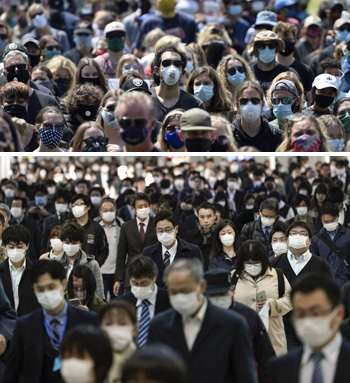
Wearing masks to avoid Covid became a symptom of global hypnosis - top, the United Sates; bottom, Japan In the same way, it does not matter how many people are injured by the COVID measures, because the focus is on COVID and everything else has vanished, in psychological terms. People can be killed for not wearing a mask and the hypnotized won’t raise an eyebrow. Children can die from starvation and friends can commit suicide from financial desperation – none of it will have a psychological impact on the hypnotized because to them, the plight of others does not register. A perfect example of this psychological blinding to reality is how COVID jab deaths and injuries are simply unrecognized and not even considered to be causal. People will get the shot, suffer massive injuries, and say, “Thank goodness I got the shot or it would have been so much worse.” They cannot conceive the possibility that they were injured by the shot. I’ve even seen people express gratitude for the shot when someone they supposedly loved died within hours or days of getting it! It’s just mindboggling. The psychological dynamics of hypnosis does explain this irrational and otherwise incomprehensible behavior, but it’s still quite surreal. Desmet says: “Even while I know the mechanisms at work, I’m still baffled every time it happens. I almost can’t believe what I see. I know someone whose husband died a few days after the vaccine, during his sleep, from a heart attack. Psychological roots of mass formation As mentioned, mass formation, or mass hypnosis, can occur when certain psychological conditions are present in a large-enough portion of society. The four central conditions that need to exist in order for mass formation to arise are:
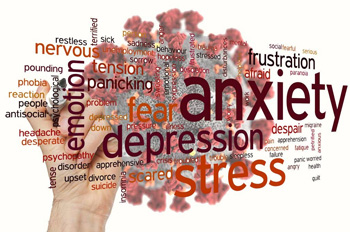
How mass formation emerges in a society Once a large-enough portion of society feels anxious and out of control, that society becomes highly vulnerable to mass hypnosis. Desmet explains: “Social isolation, lack of meaning, free floating anxiety, frustration and aggression are highly aversive because if people feel anxious, without knowing what they feel anxious for, they typically feel out of control. They feel they cannot protect themselves from their anxiety.
Covid's narrative spread by the media & the establishment outlets followed the rules of mass hypnosis And, if under these conditions a narrative is distributed through the mass media, indicating an object of anxiety, and at the same time, providing a strategy to deal with the object of anxiety, then all this free-floating anxiety might connect to the object of anxiety. This article was first published on Transhumanism.News on July 1, 2022. Continued
Posted August 17, 2022 |
Historyczny kontekst masowej hipnozy Uwaga od redakcji: Chociaż zgadzamy się z ogólną tezą prof. Mattiasa Desmeta, która jest prezentowana w tej serii, nie zgadzamy się z jego historycznym przykładem wypraw krzyżowych jako przypadku masowej hipnozy. Krucjaty narodziły się ze szlachetnego pragnienia, opartego na rozsądku i inspirowanego wiarą katolicką, by wyzwolić Grób Chrystusa z rąk profanatorów. Na pewno nie z niepokoju opinii publicznej o życie katolików w Europie, jakie przedstawił prof. Desmet. - ASG Łatwiej zrozumieć, czym jest formowanie masy, jeśli uznasz to za masową hipnozę, ponieważ nie są one tylko podobne, są identyczne, mówi Desmet. Tworzenie masy jest rodzajem hipnozy, która pojawia się, gdy spełnione są określone warunki. I, co niepokojące, te warunki i pojawiający się hipnotyczny trans prawie zawsze poprzedzają powstanie systemów totalitarnych.
Państwa totalitarne opierają się na masowej hipnozie Podczas gdy totalitaryzm i klasyczna dyktatura mają pewne wspólne cechy, istnieją wyraźne różnice na poziomie psychologicznym. Według Desmeta klasyczna dyktatura na poziomie psychologicznym jest bardzo prymitywna. To społeczeństwo, które boi się małej grupy, dyktatorskiego reżimu z powodu jego agresywnego potencjału. Z drugiej strony totalitaryzm wywodzi się z zupełnie innego mechanizmu psychologicznego. Co ciekawe, państwo totalitarne nie istniało właściwie przed XX wiekiem. Jest to stosunkowo nowe zjawisko i opiera się na tworzeniu masy lub masowej hipnozie. Warunki dla tego masowego stanu hipnozy (wymienione poniżej) zostały po raz pierwszy spełnione tuż przed powstaniem Związku Radzieckiego i nazistowskich Niemiec, więc taki jest nasz kontekst historyczny. Warunki te zostały ponownie spełnione tuż przed kryzysem COVID. To, co teraz widzimy, to inny rodzaj totalitaryzmu, w dużej mierze ze względu na postęp technologiczny, który stworzył niezwykle skuteczne narzędzia do podświadomego wpływania na opinię publiczną. Mamy teraz bardzo wyrafinowane narzędzia, dzięki którym możemy zahipnotyzować znacznie większe masy ludzi, niż było to możliwe w dawnych czasach. Ale chociaż nasz współczesny totalitaryzm jest raczej globalny niż regionalny, a wojna informacyjna bardziej wyrafinowana niż wszystko, co mogliby zmusić Sowieci czy naziści, podstawowa dynamika psychologiczna jest wciąż identyczna. Zrozumienie hipnozy Czym więc są te psychologiczne dynamiki? „Tworzenie masy” to termin kliniczny, który w żargonie laików można po prostu przetłumaczyć jako rodzaj masowej hipnozy, która może nastąpić po spełnieniu pewnych warunków. Kiedy jesteś zahipnotyzowany, pierwszą rzeczą, jaką zrobi hipnotyzer, jest odłączenie lub wycofanie twojej uwagi z otaczającej cię rzeczywistości lub otoczenia. Następnie, poprzez swoją hipnotyczną sugestię – zwykle bardzo prostą narrację lub zdanie wypowiedziane na głos – hipnotyzer skupi twoją pełną uwagę na jednym punkcie, na przykład na poruszającym się wahadle lub tylko na jego głosie. Z perspektywy zahipnotyzowanej osoby będzie się wydawać, że rzeczywistość zniknęła. Skrajnym tego przykładem jest stosowanie hipnozy do uniewrażliwienia na ból podczas operacji. W takiej sytuacji skupienie mentalne pacjenta jest tak wąskie i intensywne, że nie zauważa on, jak wcina się jego ciało.
Noszenie masek w celu uniknięcia Covida stało się symptomem ogólnoświatowej hipnozy – góra , Stany Zjednoczone; dół , Japonia W ten sam sposób nie ma znaczenia, ile osób jest rannych przez środki COVID, ponieważ skupiamy się na COVID i wszystko inne zniknęło z psychologicznego punktu widzenia. Ludzie mogą zostać zabici za to, że nie noszą maski, a zahipnotyzowani nie podniosą brwi. Dzieci mogą umrzeć z głodu, a przyjaciele popełnić samobójstwo z desperacji finansowej – nic z tego nie będzie miało psychologicznego wpływu na zahipnotyzowanych, ponieważ dla nich los innych nie jest rejestrowany. Doskonałym przykładem tego psychologicznego zaślepienia rzeczywistości jest to, że zgony i obrażenia spowodowane przez COVID są po prostu nierozpoznawane i nawet nie uważane za przyczynowe. Ludzie dostaną zastrzyk, doznają poważnych obrażeń i powiedzą: „Dzięki Bogu, że dostałem zastrzyk, bo byłoby o wiele gorzej”. Nie mogą sobie wyobrazić możliwości, że zostali ranni przez strzał. Widziałem nawet ludzi, którzy wyrażali wdzięczność za strzał, gdy ktoś, kogo rzekomo kochali, zmarł w ciągu kilku godzin lub dni od jego zdobycia! To po prostu zadziwiające. Psychologiczna dynamika hipnozy wyjaśnia to irracjonalne i skądinąd niezrozumiałe zachowanie, ale wciąż jest to dość surrealistyczne. Desmet mówi: „Nawet jeśli znam działające mechanizmy, wciąż jestem zdumiony za każdym razem, gdy to się dzieje. Prawie nie mogę uwierzyć w to, co widzę. Znam kogoś, kogo mąż zmarł kilka dni po szczepieniu, podczas snu, na atak serca. Psychologiczne korzenie powstawania masy Jak wspomniano, formacja masowa lub masowa hipnoza może wystąpić, gdy pewne stany psychiczne występują w wystarczająco dużej części społeczeństwa. Cztery główne warunki, które muszą zaistnieć, aby zaistniała formacja masowa, to:
Jak w społeczeństwie pojawia się formacja masowa Kiedy już wystarczająco duża część społeczeństwa poczuje się niespokojna i wymyka się spod kontroli, staje się ona bardzo podatna na masową hipnozę. Desmet wyjaśnia: „Izolacja społeczna, brak sensu, niespokojny lęk, frustracja i agresja są wysoce awersyjne, ponieważ jeśli ludzie czują niepokój, nie wiedząc, czego się boją, zazwyczaj czują się poza kontrolą. Czują, że nie mogą uchronić się przed swoim niepokojem.
Narracja Covida rozpowszechniana przez media i placówki establishmentu była zgodna z zasadami masowej hipnozy A jeśli w tych warunkach za pośrednictwem środków masowego przekazu rozpowszechniana jest narracja, wskazująca na obiekt niepokoju, a jednocześnie zapewniająca strategię radzenia sobie z obiektem niepokoju, to cały ten swobodny niepokój może łączyć się z obiektem. lęku. Ten artykuł został po raz pierwszy opublikowany w Transhumanism.News 1 lipca 2022 r. Nieprzerwany
Opublikowano 17 sierpnia 2022
|
https://www.traditioninaction.org/HotTopics/j116_Psy_2.htm


